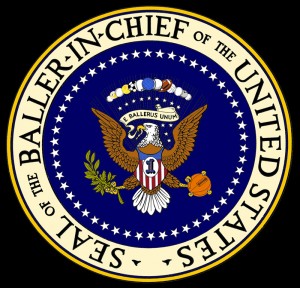
In a sport the president-elect loves, basketball, there is an analogy which, in particular, captures the changes needed at DOD. For DOD to equip itself for twenty-first century threats — threats that are decentralized and dispersed, and that require coordination between agencies and across national boundaries — it needs to learn to be both the big man and the point guard.
In basketball, the big man is at the center of the game: the biggest and most imposing player. Today’s threats require DOD to learn how to take a turn at point guard as well, using its discipline and national security expertise to develop and guide other players.
The in-coming administration inherits some of the toughest national security challenges ever. Old demons persist, but new threats have appeared that ignore the traditional dividing lines of foreign versus domestic; military versus civilian; and us versus them. Energy security, decentralized terrorism, pandemic diseases, and the disruption of cyber networks bringing down the financial system or the electric power grid or the government’s communication networks are key threats that look radically different than do hostile nation states.
With change as its byword, the new administration needs to look hard at the Department of Defense (DOD). In a sport the president-elect loves, basketball, there is an analogy which, in particular, captures the changes needed at DOD. For DOD to equip itself for twenty-first century threats — threats that are decentralized and dispersed, and that require coordination between agencies and across national boundaries — it needs to learn to be both the big man and the point guard.
In basketball, the big man is at the center of the game: the biggest and most imposing player. Today’s threats require DOD to learn how to take a turn at point guard as well, using its discipline and national security expertise to develop and guide other players.
DOD is needed to work with agencies across government to communicate and integrate different kinds of information, and to forge trust and collaboration among the agencies.
The attacks of 9/11, and the disaster of Katrina have clearly demonstrated the centrality of information sharing to understanding threats. This is even more true as we try to weave together information about the power grid with that about the intention of terrorists, or information about terrorists developing capabilities in use of computers with vulnerabilities in financial computer networks.
Today’s threats require quick, coordinated responses to natural and man-made disasters. Intelligence and operational knowledge from a variety of agencies are needed to understand these new interdependent threats, and to protect the nation. The Federal Bureau of Investigation (FBI), Department of Energy, Homeland Security, Health and Human Services — have less history than DOD in providing for the national defense. They need to develop their culture of integrating disparate pieces of information, of collaborating closely and planning ahead in a joined-up fashion. This culture of jointness is one DOD has acquired since it had to transform itself under the Goldwater-Nichols Act. DOD must help other agencies foster their core capabilities, form a team, run the plays, and develop their skills.
As the legendary Duke basketball coach Mike Krzyzewski said: “A basketball team is like the five fingers on your hand. If you can get them all together, you have a fist.” The same is true of national security today. If DOD plays the big man, we may be able to respond to some of the threats we face. But unless DOD also plays point guard we cannot create the fist we need to address the unique challenges that will determine America’s security in the twenty-first century.

 Loading ...